


Most cat toilet training systems fail for one boring reason: the tray wobbles the first time a cat puts real weight on it, and a startled cat does not try again. Nearly half of failed attempts trace back to equipment that shifts, tips, or feels unsteady under a cat's paws, not to the cat refusing to learn. That matters for anyone training a cat in a small apartment, a shared family bathroom, or a clinic setting where a scared animal cannot be coaxed twice. The systems below get ranked on three things only: how stable and safe the setup is, how easy the actual training steps are to follow, and whether the kit includes everything needed or leaves you shopping for extra parts.
Urban pet parents juggling one bathroom for the whole household want this done in weeks, not months. Trainers and vet clinics care more about a cat's confidence at each stage than about price. Retailers and families with kids just want to know which box to put on the shelf or under the tree. Read through the comparison and you will land on the right pick fast, no guessing required.
Table of Contents
What Actually Separates a Good Kit From a Bad One
Safety starts with the seat itself. A cat needs a surface that holds still under a full pounce, not one that flexes, slides on the porcelain, or pinches a tail when the lid drops.
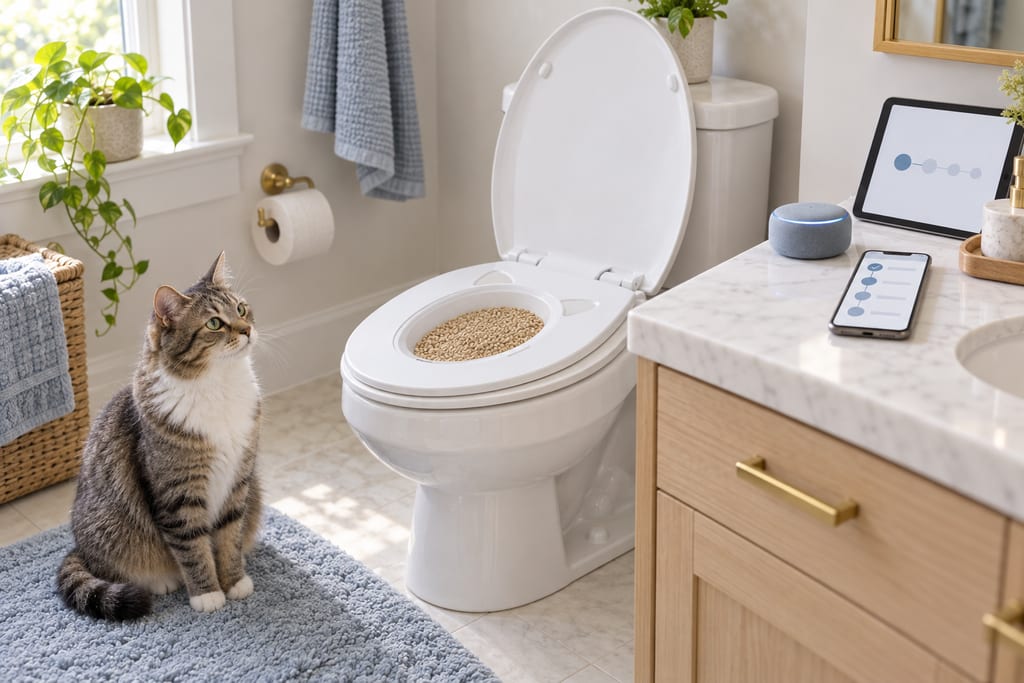
Ease of training comes down to the ring method. A good system shrinks the opening over several marked stages, so a cat moves from solid tray to open bowl without a sudden jump in difficulty, and the steps for how to train a cat to use the toilet should be written out plainly, not left for you to guess.
Completeness means the box has the seat, every ring stage, and a stool, so nothing gets ordered twice from a different seller. Missing even one ring size forces a pause in training, and a paused cat often reverts to old habits.
| Criteria | What to check | Red flag |
|---|---|---|
| Safety | Seat locks tight on both round and elongated bowls | Clips loosen after a few uses |
| Ease of training | Ring stages are numbered with clear timing | Only one ring size included |
| Completeness | Seat, rings, and stool ship together | Stool or rings sold as separate add-ons |
Watching the stages side by side makes the differences easier to spot than reading a spec sheet.
Retailers stocking shelves and clinics recommending a kit to clients both need the same answer: does the box in front of them pass all three checks, or does it leave a gap the buyer has to fill on their own.
Top Picks at a Glance Before You Compare Specs
If you only have two minutes, here is the short answer. The safest pick is any seat built with clips that stay fixed to the bowl rim, because a seat that shifts even a quarter inch will spook a cat mid-squat and end a training session for the week. The easiest pick is a kit with several ring stages instead of just two, since a cat moving from a full tray to an open bowl needs small steps, not one big jump.
The most complete pick is a bundle that ships the seat, every ring, and a stool together, because a half-finished box means a trip to a hardware store mid-training. Here is how the three labels break down for a quick gut check before reading the full scoring table below.
- Safest kit: seat with patented locking clips, holds steady under a full jump, no play in the hinge.
- Easiest kit: ring system with four or more marked stages for gradual shrinking.
- Most complete kit: bundle that includes seat, rings, and a stool in one box.
The rule that matters most across all three: a kit that scores high on only one category still leaves gaps the other two were supposed to cover.
Scoring Every Major Kit Side by Side
Scoring four real options side by side shows where each one earns its price and where it falls short. The Cat Throne System, a standalone Bemis-style seat, a Litter Kwitter-style ring kit, and a generic hardware-store training seat all handle the three criteria differently, and the gap shows up fast once you line up the numbers.
| Kit | Safety (1-5) | Ease (1-5) | Completeness (1-5) | Price |
|---|---|---|---|---|
| The Cat Throne System | 5 | 5 | 4 | $117 |
| Standalone Bemis-style seat | 5 | 2 | 1 | $55 |
| Litter Kwitter-style rings | 3 | 4 | 3 | varies by retailer |
| Generic hardware-store seat | 2 | 1 | 1 | $20-30 |
Watching the kit in action helps more than reading rows of numbers, so this walk-through compares all four side by side. Which score to weigh depends on who is buying. Clinics and trainers should weigh safety first, families with kids weigh ease of training since they want fewer accidents on the bathroom floor, and retailers stocking shelves should weigh completeness because a returned box over a missing part costs more than the sale was worth.
- Vets and behaviorists: prioritize the safety column above all else.
- Families with children: prioritize ease of training to shorten the weeks-long process.
- Retailers and multi-cat homes: prioritize completeness to avoid mid-training gaps.
Mini Reviews of the Kits Worth Considering
Three kits stand out once you get past the spec sheets: a full system, a standalone seat, and a seat-plus-stool bundle. Each one solves a different problem, and the $69 price spread between the cheapest and most complete option usually decides which one a buyer picks.
The Cat Throne System at $117 covers the full training arc with patented clips and numbered ring stages, which makes it the pick for anyone starting from scratch with a single cat. The tradeoff is that it does not include a stool, so a kitten or a small breed may need one added separately. The Cat Throne toilet training system works best as a standalone purchase for adult cats who can already reach the bowl rim on their own.
The American Made Bemis toilet seat alone, at $55, is built for someone replacing a seat that already loosened on an existing setup, not for starting training from zero since it ships without rings. The Humane Cat Throne Bundle at $124 adds a step stool to the full system, which makes it the better buy for kittens, small cats, or any multi-cat household training more than one animal through the same bathroom.
- Seat only ($55): best for upgrading a seat that already loosened.
- Full system ($117): best for a single adult cat starting training.
- Bundle with stool ($124): best for kittens, small breeds, or multi-cat homes.
One number worth keeping straight here: the $7 gap between the full system and the bundle buys a stool most small cats will actually need.
Matching a Kit to Your Cat and Your Household
The right kit depends on the cat in front of you, not just the household budget. A kitten or a small adult cat needs a stool for comfortable height access, since jumping straight onto a toilet rim from the floor is a bigger leap than it looks for a cat under eight pounds.
A senior cat or one with arthritis needs the most stable seat on the list, with zero flex under weight, because a wobble that a young cat shrugs off can make an older cat avoid the toilet entirely. Readers managing an aging cat's training timeline can find more detail in the guide to training older cats. Multi-cat households need the completeness score from the table above to matter most, since a missing ring stage mid-training sends every cat in the house back to old habits at once.
Renters and apartment dwellers should pick a kit that clamps onto the existing bowl without drilling or adhesive, since a damaged fixture becomes a deposit problem, not just a training problem.
- How many cats are training at the same time?
- Does the cat have any mobility or joint issues?
- Is the toilet rented or owned?
One rule holds across every household type: a kit that fits the cat's current size and mobility beats one that just fits the bathroom.
Piece It Together or Buy It Solved
A standalone seat looks like the cheaper choice until it sits next to a ring kit from a different maker. Clip shapes and ring diameters are not standardized across brands, so a seat from one seller and rings from another often leave a gap at the rim, and that gap is exactly where a cat balks mid-stage. That mismatch, not the cat's patience, is what stalls training in week two or three. Buying seat, rings, and stool as one unit removes that guesswork, since nothing has to be cross-checked for fit before the first session starts. It also means a buyer only orders once instead of returning a part that does not seat flush and ordering again. For a full breakdown of what separate pieces can and cannot be mixed, the guide to reusable cat training systems covers the swap rules in detail. Price should never pull the safety score down, because a seat that flexes under a full-grown cat ends the session regardless of what it cost. The matrix below sorts by what the buyer is actually optimizing for.
- Lowest cost, willing to shop separately for rings: standalone seat
- One cat, starting from zero, no stool needed: full system only
- Kitten, small breed, or multiple cats sharing a bathroom: bundle with stool
- Clinic or trainer setting where a stall cannot be repeated: highest safety score available, regardless of price
Make the Call Based on What Your Cat Needs Today
Go back to whichever row mattered most to you, safety, ease, or completeness, and let that one answer decide. A clinic or trainer should land on the highest safety score and stop there. A family with a kitten or small cat should grab the stool bundle. A single adult cat starting fresh is covered by The Cat Throne System on its own. None of these choices need more research, since the setup itself takes one afternoon and the clips either lock tight or they don't. Put the box on the counter, order it, and start training this weekend instead of next month.
Questions Before You Buy a Kit
Will a cat toilet seat still fit if my toilet already has a bidet attachment?
Most bidet attachments mount under the seat hinge bolts, which is the same spot a cat toilet seat clamps onto, so the two often compete for the same hardware. Measure the bolt spacing and hinge clearance before ordering, since a bidet plate can add height that throws off clip alignment. If the attachment sits flush and low profile, a seat with patented locking clips usually still seats fine.
Can I buy the standalone seat now and add a step stool later if my cat turns out to need one?
Yes, you can add a stool anytime without replacing the seat, since the two parts solve separate problems: one handles the toilet rim, and the other handles the jump up to it. If your cat is a kitten or small breed, it is worth checking the Humane Cat Throne Bundle's price against buying a stool separately later, since bundling it from the start usually costs less than two orders.
Does one seat work on both round and elongated toilets, or do I need to buy a different one for each shape?
A seat built for both shapes means buying once instead of returning it after checking your bowl. The Cat Throne seat is precision-engineered to fit standard round and elongated toilets, so you can choose based on your bathroom's bowl shape at checkout instead of hunting for a separate model. Measure your bowl length before ordering either way.
If I already own a generic ring system, can I just buy a premium seat and use my old rings with it?
Mixing brands is possible but risky, since ring diameters and seat lips are not built to a shared standard across manufacturers. A ring that was sized for one seat's lip can sit loose or crooked on another, and a crooked ring is what makes a cat hesitate mid-stage. Buying seat and rings from the same kit removes that fitting guesswork entirely.