


Say Goodbye to the Litter Box for Good
Most cats can learn to use a real toilet in about 4 to 8 weeks, using a slow, gradual method that raises a training tray a little at a time until the litter box is gone completely. That means no more scooping, no more bags of litter piling up, and no more smell taking over your bathroom. Once you understand how the process works, getting rid of the litter box for good stops feeling like a fantasy and starts feeling like a weekend project.
Table of Contents
Why Ditch the Litter Box in the First Place
The average cat owner spends close to $200 a year on litter alone. That number climbs fast if you've got more than one cat, or if you're buying the premium clumping stuff every month.
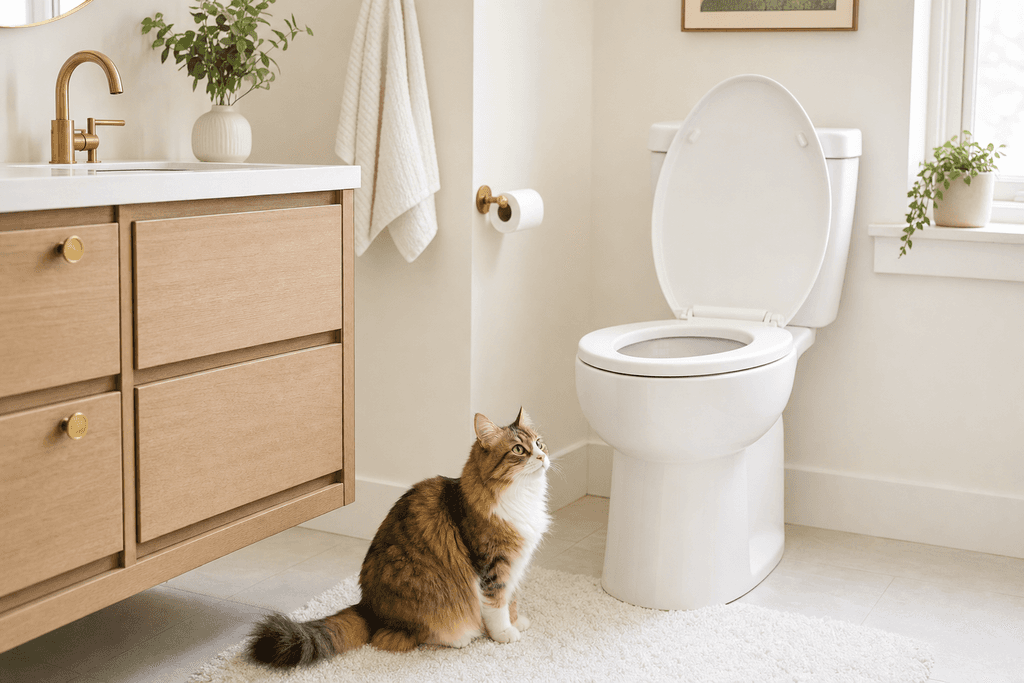
It's not just about money though. Clay litter dust kicks up into the air every time your cat digs, and that's not great for anyone breathing it in, especially kids or folks with asthma.
- Cost - hundreds of dollars a year on litter you just throw away
- Air quality - dust and ammonia smell linger indoors
- Space - a bulky box eating up floor room in a studio or small apartment
- Waste - most litter isn't biodegradable and sits in a landfill for years
If you live in a city apartment, you already know how precious floor space is. A litter box in the corner of your bathroom or closet is square footage you're not getting back.
The Step-by-Step Toilet Training Process
Toilet training isn't something that happens overnight, and any cat trainer will tell you rushing it usually backfires. The whole idea is to move things slowly enough that your cat barely notices the change.
Cats learn through small, repeated steps, not big surprises. Here's the basic order most owners follow:
- Place the litter box right next to the toilet for a few days
- Set the box on top of a training tray placed on the toilet seat
- Raise the tray height gradually over the next few weeks
- Cut back the litter amount bit by bit as your cat adjusts
- Remove the tray entirely once your cat is comfortable balancing
Each stage usually takes about a week, though every cat moves at their own pace. Some breeze through it in three weeks, others take two months, and that's completely normal.
If you want the full week-by-week breakdown, this guide on transitioning from litter box to toilet walks through timing in more detail.
Making the Transition Safe and Stress-Free
Here's where a lot of DIY setups fall apart, literally. A wobbly tray balanced on a toilet seat can scare a cat enough that they avoid the whole area for weeks.
Older cats and smaller kittens need extra stability during the balance stage, since one bad slip can set training back to square one.
| Setup Type | Stability | Included Tools |
|---|---|---|
| DIY tray + regular seat | Low | None |
| The Cat Throne System | High (clip-secured) | 3 trays, tongs, brush |
The Cat Throne attaches with patented clips to an American-made Bemis toilet seat, so there's no wobbling mid-training. It comes with three training trays, tongs for cleanup, a tidy-up brush, and flushable litter to ease that last stretch before the litter disappears completely.
Compared to setups like Litter Kwitter or CitiKitty, the difference mostly comes down to stability and how many pieces you actually get in the box. A shaky seat is often the reason cats regress, not the training method itself.
Getting rid of the litter box for good isn't about one lucky week of training, it's about steady, small steps and a setup that doesn't wobble under your cat. If you're just getting started, check out this guide on how to get rid of the litter box for good for a full overview, or compare methods first with toilet training versus litter box to see which fits your household. And if odor is what's pushing you to make the switch, this piece on fixing litter box odor for good covers that angle too.
Wrap-Up
Getting rid of the litter box for good comes down to going slow with tray elevation and not skipping steps. Your cat needs time to trust the toilet, and rushing it usually means starting over. That's exactly why a stable setup matters so much during training.
Beyond the training itself, you're looking at real savings and less waste piling up in landfills, which is a win any eco-conscious household can get behind. A system like The Cat Throne takes the guesswork out of it, with trays, tongs, and flushable litter all included so you're not piecing things together yourself.
If you want a full walkthrough before you start, check out our guide on how to transition from litterbox to toilet, or see what other cat owners noticed before and after litter box removal.
Frequently Asked Questions
How long does toilet training take
Most cats get the hang of it in four to six weeks if you stick with the step-by-step tray system. Some pick it up faster, some take longer, and that's normal. Rushing the steps is the main reason training stalls, so patience matters more than speed.
Can older or disabled cats be trained
It depends on the cat's balance and mobility, but many senior or less mobile cats can still learn with the right setup. The Cat Throne seat is built wider and more stable than most training kits, which helps cats that need extra support. If a cat has serious joint or vision issues, check with your vet first.
What happens if a cat refuses to use the toilet
Some cats resist because the steps moved too fast or the toilet feels unstable under them. Going back a step and giving it more time usually fixes this. Keeping a backup litter box nearby during training also helps avoid accidents while your cat adjusts.